
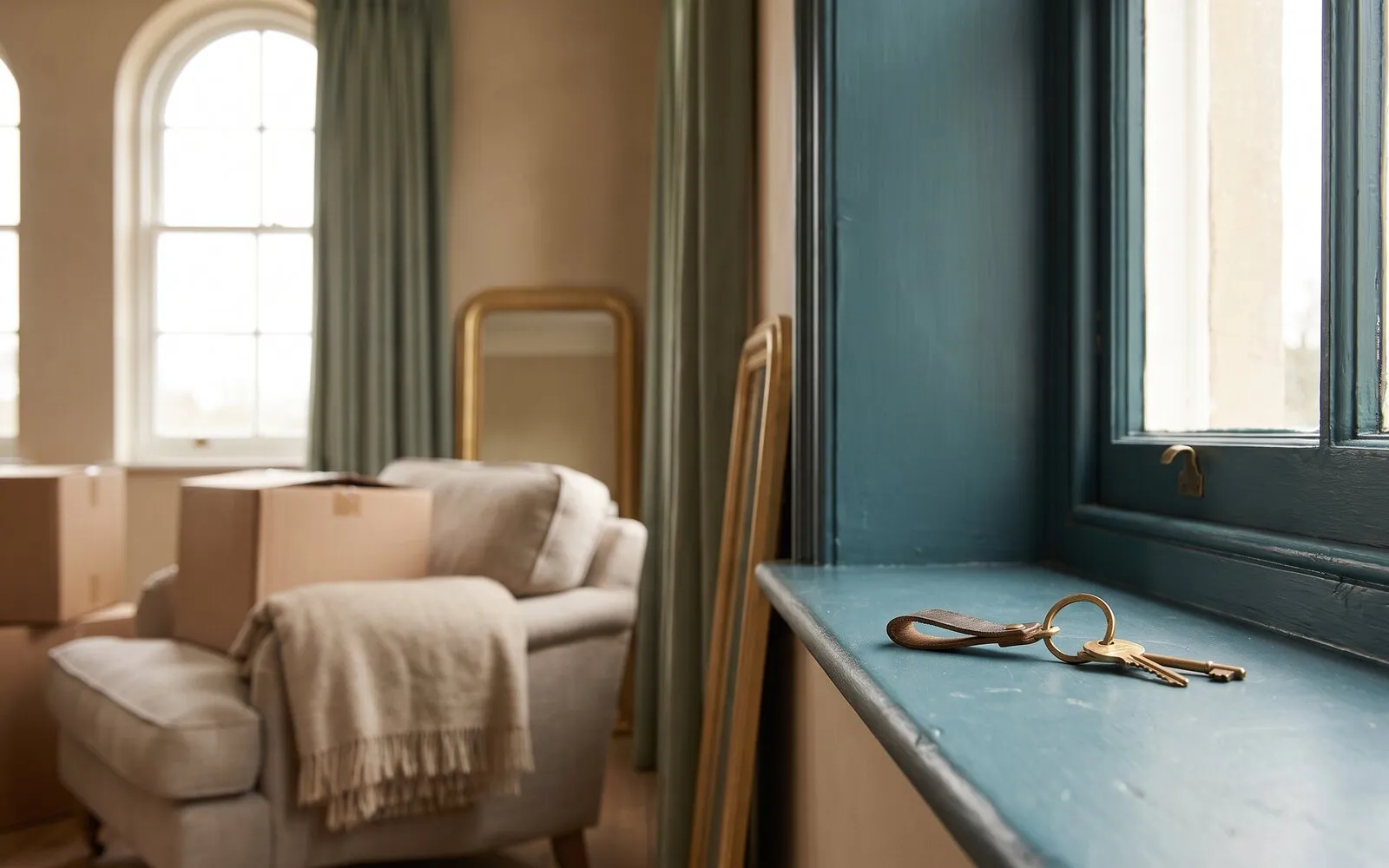
Where will I live? It is often the first very concrete question that arises in a separation, even before the matters of principle. It deserves a clear answer, because the home touches budget, security and the children's lives all at once.
Owners or tenants, two different logics
If the home is rented, the question is about the lease: who stays, who leaves, on what terms. If the couple owns it, it is settled with the division of assets and depends on the matrimonial regime, a point we set out in the article on the marriage contract. In both cases, the property's value and any ongoing loans weigh heavily on the decision.
What can be decided during the procedure
A divorce takes time, and everyone needs somewhere to live in the meantime. It is often possible to organise, from the outset, who occupies the home during the procedure, without prejudging the final division. This interim step keeps the situation from freezing under pressure.
The home after the divorce
Several outcomes exist: one buys out the other's share, the property is sold and the proceeds split, or its use is arranged for a time. None is automatically the right one: it all depends on each person's means, the presence of children and what the couple built together.
When there are children
Children often change the picture. Preserving their stability, and sometimes letting them stay in a familiar setting, can weigh on the decision, alongside the arrangements for custody and parental authority. Here too, these questions are settled alongside the other steps of a divorce.
The loan does not end with the couple
When a loan was taken out by two people, separating does not split it. The bank keeps the right to claim the full instalments from either of you, whoever is living in the property. The one who leaves therefore stays committed until something is changed, which often blocks their ability to rent elsewhere or borrow again. Settling this early, by discussing with the bank whether one of you takes the loan over or it is repaid, avoids carrying for years a debt on a home you no longer live in.
Is staying always the right answer
Keeping the home is an understandable instinct, especially when it holds the family's memories. It is still worth doing the arithmetic calmly: the charges, the loan and the upkeep will now rest on a single income. Many people obtain the right to stay and find themselves, two years later, forced to sell on worse terms. A more modest but sustainable home sometimes protects better than a victory of principle, including for the children, who cope badly with seeing a parent financially strangled.
What to avoid in the heat of the moment
Some moves made in the emotion of the day are paid for over a long time. Leaving the home without formalising anything, changing the locks, emptying a joint account or moving furniture out while the other is away: each of these weakens the position of whoever does it and poisons the discussions that follow. If leaving is unavoidable, it is better prepared, recorded in writing and advised on beforehand rather than afterwards. The one exception concerns situations of danger, where safety comes before every other consideration, as we explain in our article on domestic violence.
Tenants: the name on the lease is not everything
In rented accommodation, the question turns on what was signed. Two jointly liable tenants generally remain bound together for the rent, even after one leaves, as long as the lease has not been amended or ended properly. Conversely, someone who never appeared on the lease can find themselves with no title to stay, having paid half the rent for years. Telling the landlord and putting the new situation in writing is always better than relying on an unspoken arrangement.
Furniture, works and the rest
A home is not only an address, it is also what it contains. Furniture bought together, appliances, the car parked outside, works paid for by one in a property owned by the other: these are forgotten in discussions of principle and come back on moving day, often with a disproportionate emotional charge. Making a list calmly, while you can still talk about it, settles most of these situations. As for the things that genuinely matter, photographs, family keepsakes, the children's belongings, they are better dealt with separately: they are worth nothing on paper and weigh a great deal in real life.
Every housing situation is particular. A first conversation lets you look at yours concretely and consider realistic options, in French or English.

About the author
Maître Stéphanie Makoumbou
Lawyer in Luxembourg
A family lawyer in Luxembourg, she supports families and expatriates, in French and English, with rigour and discretion.
Informational article. Not legal advice.
All newsContinue reading
4 min read
Divorce and the business: what happens to the company
The working asset you thought was personal often falls, at least partly, into the division.
Read the article : Divorce and the business: what happens to the company
4 min read
Going before the judge: preparing for the hearing
It is not a trial in the way people picture it. Knowing what to expect changes a great deal.
Read the article : Going before the judge: preparing for the hearing
4 min read
Family mediation in Luxembourg: what it really achieves
A calmer route to settle the consequences of a separation, without giving up sound advice.
Read the article : Family mediation in Luxembourg: what it really achieves